How a Tube End Forming Machine Works
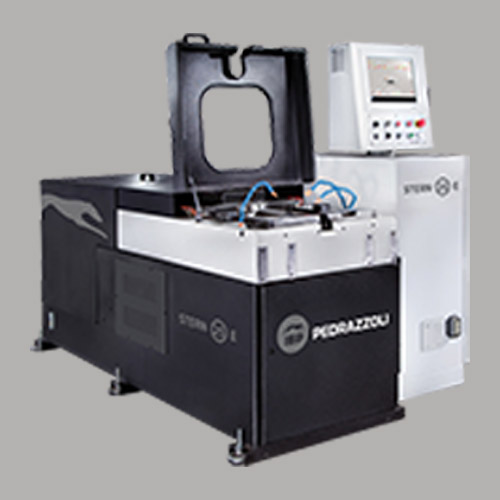
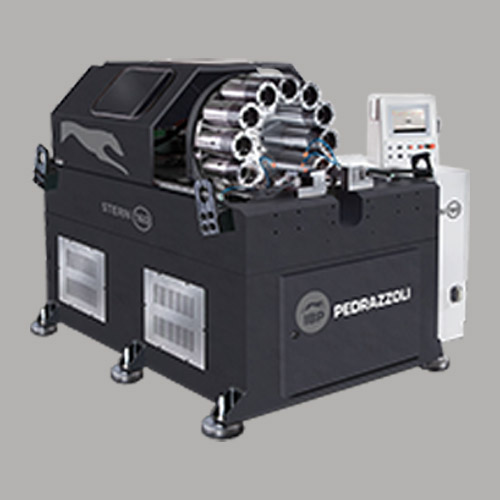
The operator creates and runs a CNC sequence through Pedrazzoli IMS (Intelligent Motion Software). The machine’s electrically controlled working axes clamp the workpiece and advance the selected tools in the programmed order. The individual model pages describe touchscreen program creation, manual jogging for setup and prototype work, and electric powered tool stations for forming and machining tasks. Stern Brown machines are not hydraulic-drive end formers.
Compare Stern Brown End Forming Machines
Capacity note: These are published model limits, not a promise that every material and end form can be produced at the maximum diameter and wall simultaneously. Material strength, wall, form depth, tolerances and tool design affect achievable capacity.
What to Review Before Buying an End Former
- Part and material: tube outside diameter, wall thickness, alloy and starting condition.
- Finished geometry: expansion or reduction, bead, flare, closure, machining details and required depth.
- Tolerance and finish: dimensional limits, concentricity and surface requirements.
- Tool sequence: number of operations, station requirements and changeover needs.
- Production requirements: part volume, cycle expectations, part handling and operator workflow.
If the part also requires programmed bends, compare the Bend Master CNC tube bending machines. End forming and tube bending solve different stages of a tube-fabrication process.
Tube End Forming Process Definitions
End-forming terms are sometimes used differently between shops. These definitions help clarify the requested finished geometry before machine and tooling review:
- Expanding: increasing the tube-end diameter to create a larger socket, connection or mating section.
- Reduction: decreasing the tube-end diameter to create a smaller connection or insertion section.
- Swaging: a broad shop term that can refer to reducing or otherwise reshaping a tube end with dies. Rotary swaging is a distinct process that uses repeated radial tool action. The published Stern Brown material documents reduction and programmable end forming, but does not establish rotary-swaging capability; identify the intended swage geometry for an application and tooling review.
- Flaring: opening the tube mouth into an angled, conical or bell-shaped end for a specified connection geometry. Flaring is included in the published Stern Brown operation list, subject to model and tooling review.
- Flanging: creating a lip or face that extends outward from the tube end. A flange is distinct from a flare. Flanging is not specifically identified in the published Stern Brown operation list reviewed for this page, so the drawing must be evaluated before confirming machine and tooling suitability.
- Threading: creating an internal or external thread at the tube end. Published Stern Brown operations include threading and tapping; thread form, material and tooling still require review.
- Beading: creating a controlled circumferential feature near the tube end, often specified for retention, joining or sealing geometry. Published Stern Brown operations include beading, subject to the part and tooling.
No one process or capacity applies automatically to every Stern Brown model. Confirm the finished shape, alloy, wall, tolerances and tooling sequence for the specific part.
End Forming Applications by Industry
The following are general buyer use cases for evaluating tube-end geometry, not a list of Pedrazzoli customers, installations or industry approvals:
- Hydraulic systems: connection ends, beads, reductions and threaded features for tube or hose-interface components. Include sealing geometry plus the applicable pressure and test specification in the review.
- Refrigeration and cooling: expanded or reduced ends, beads and flares used in joining and sealed fluid-line assemblies. Material, cleanliness, sealing and leak-test requirements should be defined.
- Naval and marine equipment: end connections for fluid, cooling or exhaust tube assemblies where alloy selection, corrosion environment and inspection requirements can drive the process.
- Airplane and aerospace components: tightly controlled tube-end geometry for fluid, duct or structural assemblies. Suitability depends on the customer drawing, material, process controls and required qualification; this page makes no aerospace certification or approval claim.
- Agricultural equipment: formed ends for hydraulic, fuel, intake, exhaust or other machine tube assemblies, with the production volume and joining method defined.
- Automotive components: formed ends for exhaust, coolant, fluid-transfer or structural tube parts, subject to the drawing, material and customer test requirements.
Tube End Forming Machine FAQs
Are Stern Brown end formers electric CNC machines?
Yes. Stern Brown machines use electric CNC control with electrically controlled working axes rather than hydraulic drive. Pedrazzoli IMS is used to create and run the programmed sequence.
What operations can Stern Brown machines perform?
Published operations include expanding, reducing, end forming, beading, facing, chamfering, closing, threading, tapping and flaring. The available sequence depends on the selected model and application tooling.
How do I choose among the Stern Brown 25, 50, 80 and 160?
Start with the tube diameter and wall, then review end-form depth, geometry, material, tolerances, station count and production requirements. The comparison above is a starting point; tooling and material can limit practical capacity.
Can one machine perform more than one operation?
Yes. The series is designed to program multiple forming and machining operations in a work cycle, subject to the model, station configuration and tooling developed for the part.
Request an End Forming Application Review
Send the part drawing and final end geometry; material and alloy; tube outside diameter and wall thickness; dimensional tolerances; sealing or connection requirements; applicable pressure or test specification where relevant; and prototype, batch and annual volumes. Pedrazzoli USA can review the part and identify an appropriate machine and tooling approach.
Request a Quote